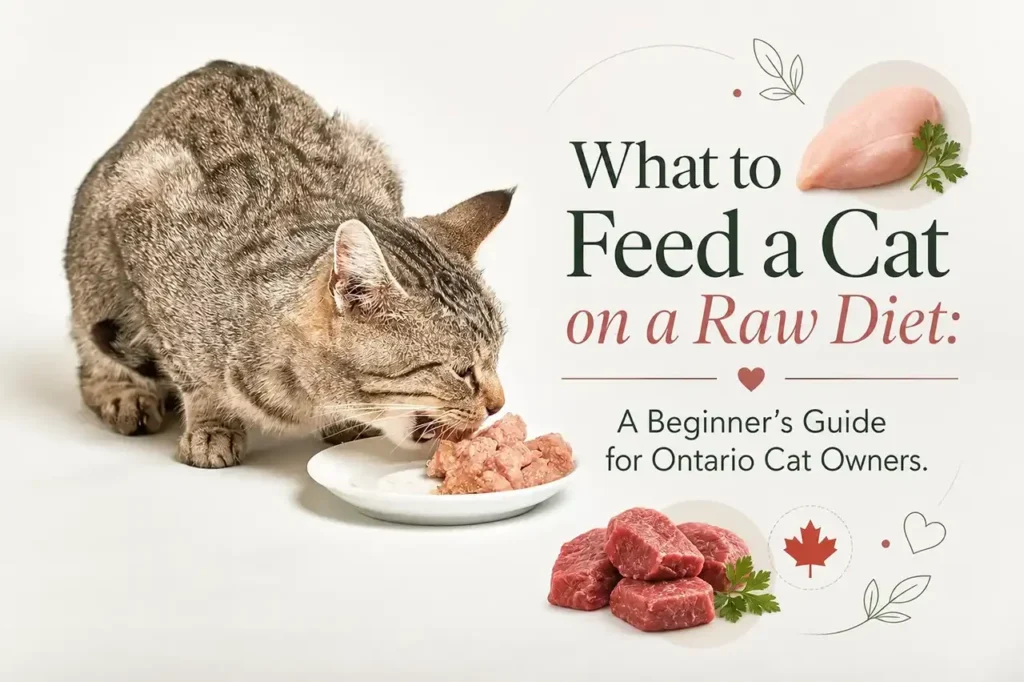
Cats are not small dogs, and that matters a great deal when you are planning a raw diet. A cat’s nutritional needs are more specialized, their food preferences can be more rigid, and their tolerance for random experimentation is often much lower. That is why the best beginner approach is not to build meals from guesswork. It is to start with complete, cat-appropriate raw options and keep the feeding plan simple enough to follow consistently.
For many Ontario cat owners, the idea of raw feeding is appealing because cats are obligate carnivores with a natural need for moisture-rich, animal-based nutrition. At the same time, beginners often worry about balance, portion size, texture preferences, freezer logistics, and whether their cat will accept the new food at all. Those concerns are completely reasonable. The good news is that a well-structured transition can make the change much easier than it first appears.
The goal is not to create a highly complicated feeding system on day one. The goal is to give your cat a nutritionally appropriate starting point, monitor how your cat responds, and then build confidence from there.
Why cats need a different raw feeding approach
Cats have different feeding biology from dogs. They are obligate carnivores, which means they rely heavily on nutrients that come primarily from animal tissue rather than plant-heavy diets. They also tend to do best on high-moisture meals with strong palatability and a structure that feels familiar enough for them to accept.
This is one reason beginner cat owners are usually better off starting with complete raw cat formulas instead of trying to assemble meals from unrelated parts. A balanced product reduces the risk of leaving out something important while also making portioning easier. In practice, simplicity protects both the cat and the owner.
Cats are also more likely than dogs to resist sudden food changes. Some cats need patience, warming, gradual mixing, or repeated exposure before they fully accept a new texture or protein. That does not mean raw feeding is the wrong choice. It simply means the transition often needs to be calmer and more deliberate.
What a cat should eat on a raw diet
A cat on a raw diet should generally eat a balanced, complete, cat-appropriate raw formula that is designed to support feline nutritional needs. For most beginners, this is the best place to start because it removes much of the uncertainty.
Cat-specific options such as Feline Complete Rabbit Pork Mackerel – Iron Will, Feline Complete Pork Duck Mackerel – Iron Will, Feline Complete Turkey Beef Mackerel – Iron Will, and Cat Blend Chicken Beef Fish offer a variety of options to get you started.
For cats that need variety later, rotation can be useful, but the first priority is nutritional consistency.
The best way to start a beginner cat
The safest beginner method is to choose one complete raw cat food, feed measured portions, and avoid introducing too many extras at once. This makes it much easier to see whether your cat likes the food, tolerates the digestion, and maintains a stable appetite.
Cats do not need a buffet of random proteins in the first week. They need a predictable routine. A single feline formula is often enough to begin the transition successfully.
For example, a new raw feeder might start with Feline Complete Turkey Beef Mackerel – Iron Will or Cat Blend Chicken Beef Fish and stay with that choice long enough to judge appetite, stool, and acceptance before rotating into a second option.
How much raw food should a cat eat?
The exact amount depends on body weight, age, activity level, body condition, and whether the cat is in maintenance, weight-loss, or weight-gain mode. In general, most adult cats need a measured daily amount that is adjusted over time rather than guessed casually.
A cat that is lean, active, and young may need more than a sedentary indoor cat. A senior cat may need closer monitoring to protect muscle condition. Kittens, like puppies, have different growth needs and should not automatically be fed like mature adults and are best given as much food as they will eat and offered throughout the day.
The right mindset is to start with a reasonable portion, then monitor body condition and appetite over the following weeks. The goal is not perfection on the first day. The goal is accurate adjustment over time.
Cat type | Feeding principle | What to watch |
|---|---|---|
Indoor adult cat | Start with a measured maintenance portion | Watch waistline and body condition |
Active or younger adult cat | May need more food relative to size | Watch for unintended weight loss |
Senior cat | Portion carefully and protect muscle condition | Monitor appetite and body shape |
Kitten | Growth needs are different and usually higher | Avoid using generic adult logic |
Why complete formulas matter for cats
One of the biggest mistakes in beginner cat feeding is assuming that any raw meat will do. Cats need more than raw muscle meat alone. A long-term raw diet must be properly balanced and should not be built casually from isolated ingredients unless the person has a structured formulation plan.
Feline Complete Rabbit Pork Mackerel – Iron Will, Feline Complete Pork Duck Mackerel – Iron Will, and Feline Complete Turkey Beef Mackerel – Iron Will are balanced and complete options.
How to transition a cat to raw food
Cats are often slower than dogs to accept dietary change. Some cats are adventurous, but many are highly routine-driven. A successful transition may involve mixing a small amount of raw into the current food, serving the new food at an appealing temperature, offering meals on a regular schedule, and resisting the urge to switch products every day.
A cat that rejects one texture once has not necessarily rejected raw forever. Repeated calm exposure often works better than dramatic pressure. Some cats accept chunkier food, while others do better with smoother textures or a familiar-feeling blend.
Two cat-friendly logical starter choices that work for many households are our Cat Blend Chicken Beef Fish and Feline Complete Turkey Beef Mackerel – Iron Will
What if your cat is picky?
Picky eating is one of the main reasons cat owners hesitate to try raw food. Fortunately, pickiness is often manageable when the transition is structured properly. Cats may respond better when the meal is served slightly less cold, offered in small portions, and kept consistent long enough for the cat to become familiar with it.
Texture and protein choice also matter. A cat that refuses one formula may accept another. That does not mean the whole raw plan has failed. It may simply mean the cat prefers duck over rabbit, or a different blend over a different mouthfeel.There is nothing wrong with starting with one complete formula and, if needed later, rotate into another such as Feline Complete Pork Duck Mackerel – Iron Will or Feline Complete Rabbit Pork Mackerel – Iron Will.
Useful raw extras for cats
Extras should never replace a balanced main diet, but some add-ons can support variety, hydration, palatability, or digestive comfort when used appropriately. The main caution is not to overload the bowl with too many extras before the basic routine is stable.
For example, cat owners may be interested in small, species-appropriate additions such as Whole Raw Sardines – Iron Will, DH Lake Smelts, Quail Eggs 18 Pack – Iron Will, or Crosswind Farms Kefir Goat Milk. These make sense as supportive extras, but the foundation still needs to be a complete feline raw food.
For digestion-related issues or to help transition to raw food we suggest looking at either Feline Gut Soothe or Felix’s Flora. Both options off gut support during this crucial time and after to be proactive.
Hydration matters for cats
One of the advantages of raw feeding for cats is that it can align well with their preference for moisture-rich food. Many cats naturally have low thirst drive compared with how much hydration they actually benefit from. Meals with higher moisture can be part of a more supportive daily routine.
That does not mean every cat automatically thrives on the first raw product offered, but it does mean hydration should remain part of the conversation. Some cats may benefit from the occasional use of moisture-supportive add-ons such as Raw Goat Milk or Crosswind Farms Kefir with Pumpkin Goat Milk, provided the main diet remains the priority.
How to know whether the diet is working
Success is not measured only by whether the cat eats one meal enthusiastically. The better signs are a stable appetite, consistent stool, appropriate body condition, good coat quality, and a routine that the household can actually maintain.
A cat that is eating complete raw meals reliably, maintaining weight appropriately, and tolerating digestion well is usually giving you clearer feedback than a cat owner’s anxiety might suggest. Progress often becomes easier to judge when you focus on patterns over time rather than reacting to one imperfect day.
Positive signs | Signs to reassess |
|---|---|
Reliable meal acceptance | Ongoing refusal of the food |
Stable stool | Repeated digestive upset |
Appropriate weight maintenance | Unintended weight loss or gain |
Good energy and coat condition | Persistent lethargy or poor overall condition |
Calm, consistent feeding routine | Constant switching with no clear plan |
Common beginner mistakes
The most common beginner mistake is feeding unbalanced raw meat and assuming it is automatically complete. The second is changing foods too quickly when the cat does not respond perfectly right away. The third is introducing too many extras before the main diet is stable.
Another frequent issue is treating cats exactly like dogs in both product selection and transition speed. Remember to focus on feline formulas, patience, and a more controlled approach to change.
When to ask for extra guidance
If your cat is a kitten, a senior with health concerns, underweight, overweight, chronically ill, or dealing with ongoing digestive issues, it is wise to get individualized guidance before making major diet changes. The same is true if your cat has a long history of extreme food selectivity or medical nutrition concerns.
Final thoughts
If you are wondering what to feed a cat on a raw diet, the best beginner answer is usually a balanced, cat-appropriate complete raw formula. Start simple. Keep the routine steady. Avoid turning the bowl into a science experiment. Once your cat is eating well and staying stable, you can think more confidently about rotation or extras.
For most cat owners, the smartest first step is not complexity. It is choosing a complete feline product, measuring meals carefully, and giving the transition enough time to work.
New To Feeding RAW?
If you are starting raw for the first time, begin with one complete feline option such as Feline Complete Turkey Beef Mackerel – Iron Will or Cat Blend Chicken Beef Fish, then keep the routine simple for the first few weeks. If your cat needs digestive support during the transition, Feline Gut Soothe or Felix’s Flora are logical next links to explore.
Product type | Suggested link |
|---|---|
Complete feline formula | |
Complete feline formula | |
Complete feline formula | |
Beginner cat blend | |
Digestive support | |
Digestive support | |
Moisture-supportive add-on | |
Moisture-supportive add-on | |
Whole-food extra | |
Whole-food extra | |
Whole-food extra | |
Treat option | Jay’s Tasty Adventures Fermented Duck Grass Chicken Cat Treats 60g |
Treat option | Plato Pet Treats Air Dried Cat Treats Chicken with Catnip Recipe 70g |
Products Your Cat Will love!
Lorem ipsum dolor sit amet, consectetur adipiscing elit. Ut elit tellus, luctus nec ullamcorper mattis, pulvinar dapibus leo.
Yes, but treats should remain secondary to the main balanced diet. They work best as extras, not replacements for complete meals.
Go slowly, keep meals consistent, and avoid switching products every day. Some cats need repeated exposure, smaller portions, or a different texture before they accept the new food.
Not as a complete long-term diet unless it is properly formulated. Cats need balanced nutrition, which is why complete feline raw products are the safer beginner approach.
The best beginner choice is usually a balanced, complete raw formula designed specifically for cats, rather than random raw meat or homemade guesswork.